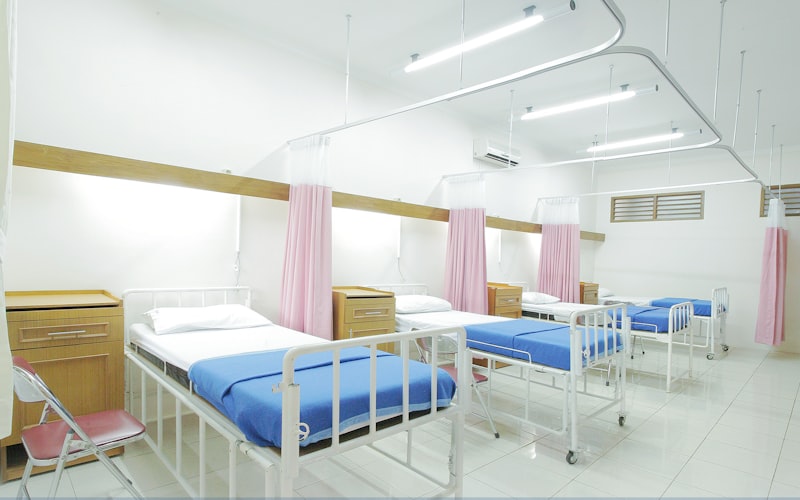
Protect patient data and enhance trust with ISO 27001. This article guides hospitals through the practical and technical steps to achieve this crucial information security certification in the digital age.
Amid the wave of digitalization in healthcare services, hospitals are faced with major challenges in maintaining the security of patient information. Incidents of data leaks, ransomware attacks, and system disruptions not only threaten patient privacy but can also paralyze vital operations and damage the institution's reputation. With increasingly massive electronic medical records (EMR), as mandated by Minister of Health Regulation (PMK) No. 24 of 2022 concerning Medical Records, as well as the obligation to integrate with the SatuSehat platform, the need for a strong information security management system has become a top priority. How can hospitals ensure that sensitive patient data remains secure, confidential, and available? The answer lies in implementing a globally recognized international standard: ISO 27001. This article will guide you, Hospital IT Managers, clinic owners, and decision-makers, through every crucial stage to obtain ISO 27001 certification, from basic concepts to in-depth and actionable technical implementation.
Basic Concepts of ISO 27001 and Its Relevance for Hospitals
ISO/IEC 27001 is an international standard for an Information Security Management System (ISMS). This standard provides a systematic framework for managing a company's sensitive information so that it remains secure. It covers people, processes, and technology. The core of ISO 27001 is protecting the three pillars of information security: Confidentiality, Integrity, and Availability, often referred to as the CIA Triad. For hospitals, this means ensuring that patient medical record data can only be accessed by authorized parties (Confidentiality), that the data is accurate and not modified without permission (Integrity), and that systems and data are always accessible when needed (Availability).
The structure of ISO 27001 consists of 10 main clauses and 114 controls in Annex A divided into 14 domains. These clauses cover the context of the organization (4), leadership (5), planning (6), support (7), operation (8), performance evaluation (9), and improvement (10). Annex A contains practical controls that can be implemented, ranging from information security policies, asset management, access control, to security incident management. For example, control A.9.1.1 concerning access control policy is highly relevant for SIMRS, where only authorized medical staff can view the medical history of certain patients, or A.12.4.1 concerning event log recording, which is essential for tracking who accessed what data and when.
Why is ISO 27001 so crucial for hospitals? First, regulatory compliance. With the enactment of Law No. 27 of 2022 concerning Personal Data Protection (UU PDP) in Indonesia, hospitals as data controllers are required to implement adequate security measures. ISO 27001 directly helps hospitals meet many of the technical and organizational requirements of the PDP Law. Second, protection of patient data. Hospitals manage sensitive personal data (PPHI) which, if leaked, can cause enormous financial, legal, and reputational harm. This certification provides assurance that the hospital has implemented best practices to protect that information. Third, increased trust. Patients, partners, and regulators will have more trust in hospitals that have been proven to have a tested and internationally certified information security system. Fourth, risk mitigation. With a systematic risk assessment framework, hospitals can identify, analyze, and manage cyber threats such as ransomware, phishing, or DDoS attacks targeting vital systems such as SIMRS or network infrastructure.
For example, a hospital with 250 beds serving an average of 700 outpatients per day generates and processes thousands of medical data records, laboratory results, and radiology images every day. Without a structured ISMS, the risk of data loss or unauthorized access is very high. ISO 27001 helps this hospital standardize processes, secure IT infrastructure, and train its staff, thereby significantly reducing the probability of security incidents. This is not only about technology, but also about an organization-wide culture of information security.
Technical and Systematic Implementation Steps
Obtaining ISO 27001 certification is not an instant process, but rather a systematic journey that requires commitment of resources and time. The following are the technical and operational implementation steps that hospitals can follow:
Phase 1: Planning and Risk Assessment
The initial step is to establish the scope of the ISMS. The hospital must clearly define which parts of the organization, information assets, and systems (for example, SIMRS, PACS, LIS, network infrastructure, data center servers, SatuSehat integration) will be covered by ISO 27001 certification. After that, identify all crucial information assets, ranging from hardware (Dell PowerEdge R750 servers, Cisco Catalyst 9300 switches), software (Laravel 11.x-based SIMRS, PostgreSQL 16 database, HAPI FHIR 6.8), data (electronic medical records, patient financial data), to services (BPJS integration, telemedicine services). Then, conduct a comprehensive risk assessment using a recognized methodology, such as NIST SP 800-30 or ISO 27005. Identify threats (for example, WannaCry ransomware attacks, SQL Injection on the SIMRS application, server failure, email phishing) and vulnerabilities (for example, weak passwords, unpatched systems, lack of a firewall). Calculate the potential impact and probability to determine the risk level. For example, a threat to the PostgreSQL database server that stores patient medical record data has a very high risk level because of its impact on data confidentiality and availability.
Phase 2: Implementation of Security Controls
Based on the results of the risk assessment, the hospital must implement relevant security controls from Annex A of ISO 27001. This involves a combination of policy, organizational, technical, and physical controls. On the policy side, create a SIMRS usage policy, a strong password policy (minimum 12 characters, a combination of uppercase/lowercase letters, numbers, symbols), security incident handling procedures, and a patient data access policy. Technologically, implement next-generation firewalls such as FortiGate 70F or Cisco ASA 5506-X to isolate the hospital network. Implement an Intrusion Detection/Prevention System (IDPS) such as Snort or Suricata to monitor network traffic for suspicious activity. Use Endpoint Detection and Response (EDR) solutions such as CrowdStrike Falcon or Sophos Intercept X on all workstations and servers for advanced threat detection and response. For backup and recovery, utilize Veeam Backup & Replication 12.1 for virtual machines and Point-in-Time Recovery (PITR) on PostgreSQL 16 for the SIMRS database. Ensure all sensitive data communications, such as bridging to BPJS or SatuSehat, use TLS 1.2 or TLS 1.3 encryption. All physical or virtual servers that store sensitive data must use full disk encryption (for example, BitLocker for Windows Server, LUKS for Linux). Collect and analyze logs from all systems (servers, SIMRS, firewalls, switches) using a Security Information and Event Management (SIEM) system such as Splunk Enterprise Security 9.x or the ELK Stack (Elasticsearch, Logstash, Kibana) version 8.x for real-time anomaly and incident detection. On the human resources side, hold regular cybersecurity awareness training (at least once a year) for all staff, from doctors to cleaning staff, about cyber threats, security policies, and the importance of protecting patient data.
Phase 3: Monitoring, Review, and Continuous Improvement
After the controls are implemented, the hospital must continuously monitor their effectiveness. Conduct internal audits regularly (for example, every 6 months) to ensure compliance with the established policies and procedures. The results of internal audits must be reported to top management in management review meetings to discuss ISMS performance, security incidents that occurred, and improvement plans. Conduct annual penetration testing (pentest) by an independent third party to identify vulnerabilities that may have been missed. For example, a pentest may find an XSS vulnerability in the patient registration module in SIMRS or a configuration flaw on the web server (Nginx 1.24 or Apache HTTP Server 2.4). Every security incident, whether successfully prevented or that occurred, must be documented, its root cause analyzed, and corrective action taken to prevent similar incidents from recurring. ISO 27001 encourages a continuous improvement approach, in which the ISMS is continually evaluated and improved in line with changes in threats and technology.
Example of Data Security Implementation in SIMRS
Data security in the Hospital Management Information System (SIMRS) is the heart of ISO 27001 in the hospital environment. The following is an example of a technical implementation for securing API access and auditing changes to patient data, which is relevant to controls A.9 (Access Control) and A.12 (Operations Security) of ISO 27001.
1. Securing the SatuSehat Integration API with API Key Authentication
When SIMRS integrates with an external platform such as SatuSehat using the FHIR R4 API, it is very important to ensure that only authorized systems can send or receive patient data. Implementing API Key authentication is one effective way.
<?php namespace App\Http\Middleware; use Closure; use Illuminate\Http\Request; use App\Models\ApiKey; // Assume there is an ApiKey model to store API keys class AuthenticateFhirApi { public function handle(Request $request, Closure $next) { $apiKey = $request->header('X-API-KEY'); if (!$apiKey) { return response()->json(['message' => 'API Key is missing'], 401); } $validKey = ApiKey::where('key', $apiKey) ->where('is_active', true) ->first(); if (!$validKey) { return response()->json(['message' => 'Invalid or inactive API Key'], 403); } // Optional, can store the authenticated API key owner to the request $request->attributes->add(['api_key_owner_id' => $validKey->user_id]); return $next($request); } }Code Explanation: This Laravel middleware, commonly used in SIMRS applications based on Laravel 10.x or 11.x, ensures that every request to a protected FHIR API endpoint has a valid and active X-API-KEY header. If the API key is missing or invalid, the system will return an HTTP 401 (Unauthorized) or 403 (Forbidden) response. This directly supports ISO 27001 controls A.9.1.1 (Access control policy) and A.9.2.1 (User registration and deregistration) by restricting access to the API only to authenticated and authorized entities. This is vital for maintaining the confidentiality and integrity of patient data exchanged with external systems, such as the SatuSehat platform or BPJS integration.
2. Audit Log of Patient Data Changes in PostgreSQL
Tracking every change to patient data is a fundamental security control, in accordance with ISO 27001 A.12.4.1 (Event logging) and A.16.1.7 (Collection of evidence). This enables digital forensics in the event of an incident and ensures accountability.
-- Create audit table CREATE TABLE audit_log_pasien ( log_id SERIAL PRIMARY KEY, pasien_id INTEGER NOT NULL, action_type VARCHAR(10) NOT NULL, -- 'INSERT', 'UPDATE', 'DELETE' old_data JSONB, new_data JSONB, changed_by VARCHAR(50) NOT NULL DEFAULT CURRENT_USER, changed_at TIMESTAMP WITH TIME ZONE DEFAULT NOW(), client_ip INET ); -- Function to capture changes CREATE OR REPLACE FUNCTION log_pasien_changes() RETURNS TRIGGER AS $$ DECLARE client_ip INET := (SELECT client_addr FROM pg_stat_activity WHERE pid = pg_backend_pid()); BEGIN IF TG_OP = 'INSERT' THEN INSERT INTO audit_log_pasien (pasien_id, action_type, new_data, changed_by, client_ip) VALUES (NEW.id, 'INSERT', to_jsonb(NEW), CURRENT_USER, client_ip); ELSIF TG_OP = 'UPDATE' THEN INSERT INTO audit_log_pasien (pasien_id, action_type, old_data, new_data, changed_by, client_ip) VALUES (OLD.id, 'UPDATE', to_jsonb(OLD), to_jsonb(NEW), CURRENT_USER, client_ip); ELSIF TG_OP = 'DELETE' THEN INSERT INTO audit_log_pasien (pasien_id, action_type, old_data, changed_by, client_ip) VALUES (OLD.id, 'DELETE', to_jsonb(OLD), CURRENT_USER, client_ip); END IF; RETURN NEW; END; $$ LANGUAGE plpgsql; -- Trigger for the patient table (assume 'pasien' is your patient data table) CREATE TRIGGER pasien_audit_trigger AFTER INSERT OR UPDATE OR DELETE ON pasien FOR EACH ROW EXECUTE FUNCTION log_pasien_changes();Code Explanation: This PostgreSQL 16.x SQL script creates the audit_log_pasien table and a trigger named pasien_audit_trigger. This trigger automatically records every INSERT, UPDATE, or DELETE operation on the pasien table (which stores patient demographic data). The stored log includes the patient ID, action type, old and new data (in JSONB format for flexibility), the user who made the change (CURRENT_USER), and the connecting client's IP address. This detailed audit log is essential for ensuring data integrity and non-repudiation, allowing hospitals to track who did what to patient data, which is a key element in ISO 27001 and PDP Law compliance. For more comprehensive SELECT access logging, it is recommended to implement it at the application level (for example, using frameworks like Laravel/Eloquent or Node.js/TypeORM) or with specialized tools such as pgAudit, because logging SELECT directly in the database can cause significant performance overhead.
Handling Sensitive Data and Security Incidents
In modern hospital operations, handling sensitive data and responding to security incidents are two crucial aspects strictly regulated by ISO 27001, particularly control A.16 (Information Security Incident Management). Integration with platforms such as SatuSehat demands accurate handling of data payloads and rapid response to potential issues.
Example FHIR R4 Data Payload for a Patient to SatuSehat
When SIMRS sends new or updated patient data to the SatuSehat platform, the format used is FHIR R4 (Fast Healthcare Interoperability Resources). The following is an example JSON payload for the Patient resource:
{ "resourceType": "Patient", "id": "example-patient-id", "meta": { "profile": [ "https://fhir.kemkes.go.id/r4/StructureDefinition/Patient" ] }, "identifier": [ { "system": "http://terminology.kemkes.go.id/CodeSystem/nik", "value": "3276010101000001" }, { "use": "usual", "system": "http://sys-ids.kemkes.go.id/mrn", "value": "00000001" } ], "active": true, "name": [ { "use": "official", "text": "Budi Santoso", "family": "Santoso", "given": [ "Budi" ] } ], "telecom": [ { "system": "phone", "value": "081234567890", "use": "mobile" }, { "system": "email", "value": "budi.santoso@example.com" } ], "gender": "male", "birthDate": "1990-01-01", "address": [ { "use": "home", "type": "physical", "text": "Jl. Merdeka No. 10, Jakarta Pusat", "line": [ "Jl. Merdeka No. 10" ], "city": "Jakarta Pusat", "postalCode": "10110", "country": "ID", "extension": [ { "url": "https://fhir.kemkes.go.id/r4/StructureDefinition/Provinsi", "valueCode": "32" }, { "url": "https://fhir.kemkes.go.id/r4/StructureDefinition/KotaKabupaten", "valueCode": "3276" }, { "url": "https://fhir.kemkes.go.id/r4/StructureDefinition/Kecamatan", "valueCode": "327601" }, { "url": "https://fhir.kemkes.go.id/r4/StructureDefinition/Kelurahan", "valueCode": "327601010" } ] } ], "maritalStatus": { "coding": [ { "system": "http://terminology.hl7.org/CodeSystem/v3-MaritalStatus", "code": "M", "display": "Married" } ] } }Example Error Message and Its Handling
Imagine your SIMRS tries to send the FHIR payload above to the SatuSehat endpoint, but receives an error response like this:
{"error": "invalid_client", "error_description": "Client authentication failed. Check client_id and client_secret."}This is an HTTP 401 Unauthorized or 403 Forbidden response from the SatuSehat API. The message "invalid_client" and the description "Client authentication failed. Check client_id and client_secret." indicate that the OAuth 2.0 credentials (Client ID and Client Secret) used by SIMRS to obtain an access token to SatuSehat are invalid or do not match those registered on the SatuSehat platform. This is a security incident that could potentially disrupt a vital integration.
Incident Handling:
- Automatic Logging: The SIMRS integration system must automatically record the details of this error in the system log (for example, via ELK Stack 8.x or Splunk 9.x) with a timestamp, the endpoint accessed, the
client_idused (with theclient_secretmasked), and the full error response. This logging is crucial for forensics and auditing in accordance with ISO 27001 A.12.4.1. - Rapid Notification: Send an emergency notification (for example, via email, SMS, or integration with Slack/Telegram) to the IT team or Operations Manager responsible for the SatuSehat integration. The notification must contain a summary of the problem and a link to the detailed log.
- Rapid Investigation: The IT team immediately checks the configuration of the
client_idandclient_secretin SIMRS, comparing them with the credentials registered on the SatuSehat developer portal. Ensure there are no typos, extra spaces, or credential changes that were not communicated. - Remediation: If the credentials are identified as incorrect, update the configuration in SIMRS. If the problem persists even though the credentials are correct, contact SatuSehat technical support to verify the application status and credentials on their side.
- Escalation Procedure: If the incident cannot be resolved within the timeframe specified in the Information Security Incident Handling Procedure (for example, 30 minutes for a P1 incident), escalate to higher management in accordance with ISO 27001 A.16.1 policy.
- Review and Prevention: After the incident is resolved, conduct a post-incident review to identify the root cause and preventive actions. This may include implementing periodic API credential rotation, strengthening credential management procedures, or adding pre-submission validation for API credentials.
Best Practices
- Establish a Clear and Realistic ISMS Scope: Specifically define the information assets, physical locations, departments, and systems (including SIMRS, PACS, LIS, SatuSehat integration, servers, networks) that will be covered by ISO 27001. A scope that is too broad can be burdensome, while one that is too narrow may not be effective in protecting patient data comprehensively. Ensure all systems that handle patient data, from registration to electronic medical records, are covered.
- Conduct a Comprehensive and Ongoing Risk Assessment: Identify all information assets, threats (for example, LockBit 3.0 ransomware, phishing attacks, hardware failure), vulnerabilities (for example, outdated software, default configurations), and their impact. Use methodologies such as NIST SP 800-30 or ISO 27005. Risk assessments must be carried out regularly (at least once a year) and whenever there is a significant change to the system or environment.
- Involve Top Management Actively: Commitment and support from the hospital's board of directors is essential. They must understand the importance of information security, allocate sufficient resources (budget, human resources), and actively participate in ISMS management reviews. Without management support, ISO 27001 implementation will be difficult to succeed.
- Prioritize Information Security Awareness Training for All Staff: People are the weakest link in cybersecurity. Regular education (at least twice a year) for all staff, from doctors, nurses, IT staff, to administration, about security policies, best practices (for example, secure passwords, phishing detection), and patient data handling procedures is crucial. Phishing simulations can be an effective tool.
- Implement Strong and Up-to-Date Technical Controls: Use relevant and current security technologies. This includes next-generation firewalls (for example, FortiGate 70F), Intrusion Detection/Prevention Systems (IDPS) such as Suricata, Endpoint Detection and Response (EDR) solutions such as CrowdStrike Falcon, encryption of data in-transit (TLS 1.3) and at-rest (BitLocker/LUKS disk encryption), as well as strong identity and access management (IAM) solutions. Ensure security updates for operating systems (Windows Server 2022, Ubuntu LTS 22.04) and applications (SIMRS, PostgreSQL 16 database) are performed regularly.
- Maintain Accurate, Current, and Easily Accessible Documentation: Documentation is the backbone of an ISO 27001 audit. This includes information security policies, standard operating procedures (SOPs) for each control, risk assessment records, internal audit reports, training records, and evidence of control implementation. Ensure all documents are version-controlled and easily accessible to authorized parties.
- Conduct Internal Audits and Penetration Testing (Pentest) Regularly: Internal audits help identify gaps and nonconformities before the external certification audit. Pentests by independent third parties (at least once a year) are a proactive way to test the resilience of the SIMRS system and infrastructure against real cyber attacks. Findings from pentests must be addressed and their follow-up verified.
- Implement a Comprehensive Business Continuity and Disaster Recovery (BCDR) Plan: Ensure the availability of SIMRS and patient data through a solid backup strategy (for example, Veeam Backup & Replication for VMs, PostgreSQL streaming replication database replication), and a tested disaster recovery plan. Conduct disaster recovery exercises regularly to ensure the plan is effective and staff are trained.
- Utilize Log Management and SIEM Solutions for Real-time Monitoring: Collect, correlate, and analyze logs from all systems (SIMRS, servers, firewalls, switches) using SIEM platforms such as Splunk Enterprise Security or the ELK Stack (Elasticsearch, Logstash, Kibana). This enables early detection of anomalies and security incidents, as well as rapid response, in accordance with controls A.12.4 and A.16.
FAQ
- Q: How long does it take for a hospital to obtain ISO 27001 certification?
A: This process varies greatly depending on the size, complexity, and level of information security maturity the hospital already has. Generally, from the initial planning stage to final certification, it can take between 9 and 18 months. Factors such as resource availability, management commitment, and the efficiency of the implementation team greatly influence this duration. - Q: Is ISO 27001 mandatory for hospitals in Indonesia?
A: From a regulatory standpoint, ISO 27001 is not yet an absolute requirement for hospitals in Indonesia, unlike hospital accreditation (for example, KARS). However, with the enactment of the Personal Data Protection Law (UU PDP) No. 27 of 2022 and the Minister of Health Regulation (PMK) No. 24 of 2022 on Medical Records, having ISO 27001 certification is highly recommended and will be a significant competitive advantage. This demonstrates a hospital's strong commitment to patient data protection and regulatory compliance. - Q: What is the difference between ISO 27001 and hospital accreditation (for example, KARS)?
A: Hospital accreditation (such as KARS) focuses on overall patient service quality, patient safety, and compliance with medical operational standards and facility management. ISO 27001, on the other hand, specifically focuses on the information security management system, namely how the hospital manages and protects its sensitive information. Although there is overlap in terms of medical record confidentiality, ISO 27001 provides a much more in-depth and structured framework for managing information security risks across the organization, including IT systems and digital data. - Q: How much does ISO 27001 certification cost?
A: The cost for ISO 27001 certification varies greatly and includes several components: consulting fees (if using a consultant), costs of implementing security controls (purchasing software, hardware, training), and certification audit fees by an accredited certification body. For a medium-sized hospital, the total cost can range from IDR 150 million to IDR 500 million or more, depending on the scope of the ISMS, the number of employees, and the complexity of the IT infrastructure. This is a strategic investment for risk mitigation and long-term compliance. - Q: How does ISO 27001 help with compliance with the PDP Law and the Electronic Medical Record Ministerial Regulation?
A: ISO 27001 provides a comprehensive framework for protecting personal data, which is the core of the PDP Law and PMK No. 24 of 2022. The controls in ISO 27001, such as access management, data encryption, incident handling procedures, and audit logs, directly support the technical and organizational requirements mandated by these regulations. By implementing ISO 27001, hospitals can effectively demonstrate their best efforts in protecting electronic medical records and sensitive patient data, as well as meet their legal obligations. - Q: What is the role of the IT Manager in the ISO 27001 certification process?
A: The IT Manager has a very central and crucial role in the ISO 27001 certification process. They are responsible for identifying IT information assets, conducting technical risk assessments, designing and implementing technical security controls (for example, firewalls, SIEM, encryption, SIMRS security), ensuring the security of network infrastructure, and managing information security incidents. The IT Manager also acts as the main liaison between the internal implementation team and external auditors regarding the technical aspects of the ISMS, ensuring all technical requirements are met and properly documented.
Obtaining ISO 27001 certification is not merely a formal achievement, but a strategic investment in the sustainability and trust of the hospital in this digital era. It is tangible proof of your commitment to protecting invaluable patient data, compliance with strict regulations such as the PDP Law and the Medical Record Ministerial Regulation, and readiness to face evolving cyber threats. Do not let the security of your patient data become a weak point that can damage reputation and operations. If your hospital needs expert assistance in designing, developing, or implementing a secure SIMRS solution, compliant SatuSehat integration, or consulting for ISO 27001 preparation, our team at Nugroho Setiawan is ready to help. With deep experience in SIMRS, BPJS/SatuSehat/FHIR Bridging, and system development, we provide technology solutions that are proven and standards-compliant. Contact us today for further discussion and realize a safe, efficient, and trusted hospital.
This article is part of the knowledge base of Nugroho Setiawan, an IT consultant in Jogja (Yogyakarta). Related solutions: SIMRS (Hospital Information System) BPJS & SatuSehat Integration. Need a free consultation?
Komentar
Belum ada komentar. Jadilah yang pertama!
Saya membantu konsultasi IT, pengembangan aplikasi, dan visualisasi data untuk rumah sakit, klinik, dan bisnis di Yogyakarta (DIY), Magelang, dan sekitarnya.
Artikel Terkait
Baca juga artikel lainnya